
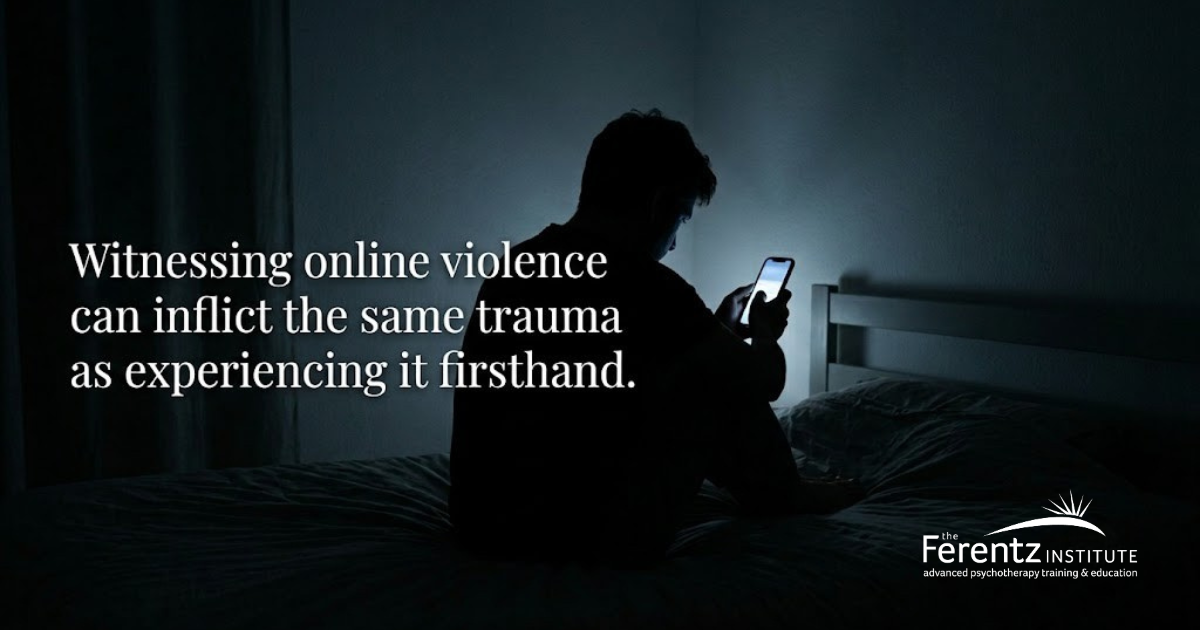
"A person does not have to be the direct target of hate or violence to be harmed; repeated exposure alone can have the same damaging effect."
June is National PTSD Awareness Month. Clinicians understand the experiences that can lead to PTSD and its many effects, including hypervigilance, an exaggerated startle response, sleep disturbance, flashbacks, intrusive thoughts, avoidance, changes in mood and thinking, and heightened sensitivity to reminders of the traumatic event. We have become skilled at diagnosing PTSD and recognize the importance of asking about histories of trauma, abuse, neglect, marginalization, and discrimination. In today’s world, I would also suggest that repeated exposure to hate-filled posts, stories, and videos depicting violence on social media can trigger similar PTSD responses. A person does not have to be the direct target of hate or violence to be harmed; repeated exposure alone can have the same damaging effect.
The Culture of "Rubbernecking
Videos showing tragic fatal shootings and accidents garner millions of views. Despite warnings of extremely graphic content- or perhaps because of that warning- as soon as these videos are posted, they go viral. Why are so many people drawn to something so disturbing? And do we really understand the long-term psychological and emotional consequences of intentionally exposing oneself to something so traumatic and horrifying? The phenomenon of “rubber necking” or feeling compelled to slow down long enough to look at the remnants of a car accident on the side of the road is nothing new. However, capturing or watching acts of violence, discrimination, even murders documented in real time and graphic detail, and having the ability to watch it repeatedly, is a byproduct of our culture’s fascination with selfies, cellphone videos, body cameras, YouTube, and social media. In my mind, the fact that the exploitation and glamorization of heinous behavior is acceptable, quickly made public, and not challenged in any way, is a part of the tragedy.
Is Public Imagery Normalizing Violence?
Is it possible that the proliferation of hate-filled, unchecked social media posts, paired with incredibly violent videos, has not only made the public immune to violent imagery but actually normalizes it and encourages us to seek it out? Of course, everyone is outraged by senseless and sick acts, but is anyone outraged by the fact that so many people are revisiting them on YouTube?
The Psychological Toll of Witnessing Trauma
Despite the fact that many people are inured to violent imagery, taking it in and forcing the brain to make sense out of it is another story.
Impact on Children and Teenagers:
- They don't have fully myelinated brains and can’t process traumatic experiences the way adults can.
- Viewing graphic, violent, and senseless imagery can evoke nightmares, sleep disturbance, anxiety, fear, phobias, and depression.
- It creates an overgeneralized sense that the world is inherently unsafe and that danger lurks around every corner.
Impact on Vulnerable Adults
- As I noted in my previous Psychology Today article, When Social Media Goes Too Far, adults who have prior histories of trauma or who have been victims of violent crimes in the past can be terribly triggered and re-traumatized when exposed to these kinds of news stories and the accompanying video footage.
Pushing Back: A Call to Action for Clinicians
As challenging or counterintuitive as it might seem, we need to push back in protest, refusing to watch this kind of footage, protecting our children from viewing it, and refusing to support news stations and social media that attempt to exploit someone else’s tragedy while granting the perpetrator celebrity status. As mental health providers, we need to include questions about social media use, the hours spent doom scrolling the kinds of videos our clients are drawn to, and the amount of time spent engaged in threads that are hateful, to assess for the strong possibility that with enough witnessing and exposure, we may be seeing new reasons why clients are presenting with the symptoms of PTSD.
I invite you to join me on Thursday, June 18, on Zoom, when I present "The Impact of Social Media on Attachment, Brain Development and Mental Health Ethical Considerations," when we will look at the unique developmental aspects of the adolescent brain and why it is so vulnerable to the negative effects of social media and video gaming.
Clinician’s Tips:
The following questions are from The Social Networking Sites Addiction Test (SSN-AT) by Montag, Muller, and Pontes.
- Do you spend too much time thinking about using social networking sites?
- Have you increased your social networking site usage to feel satisfied?
- Have you tried to stop using social networking sites several times but were not able to do so?
- Have you experienced unpleasant feelings when unable to use social networking sites?
- Have you experienced any problems in your life because of your social networking sites usage?