
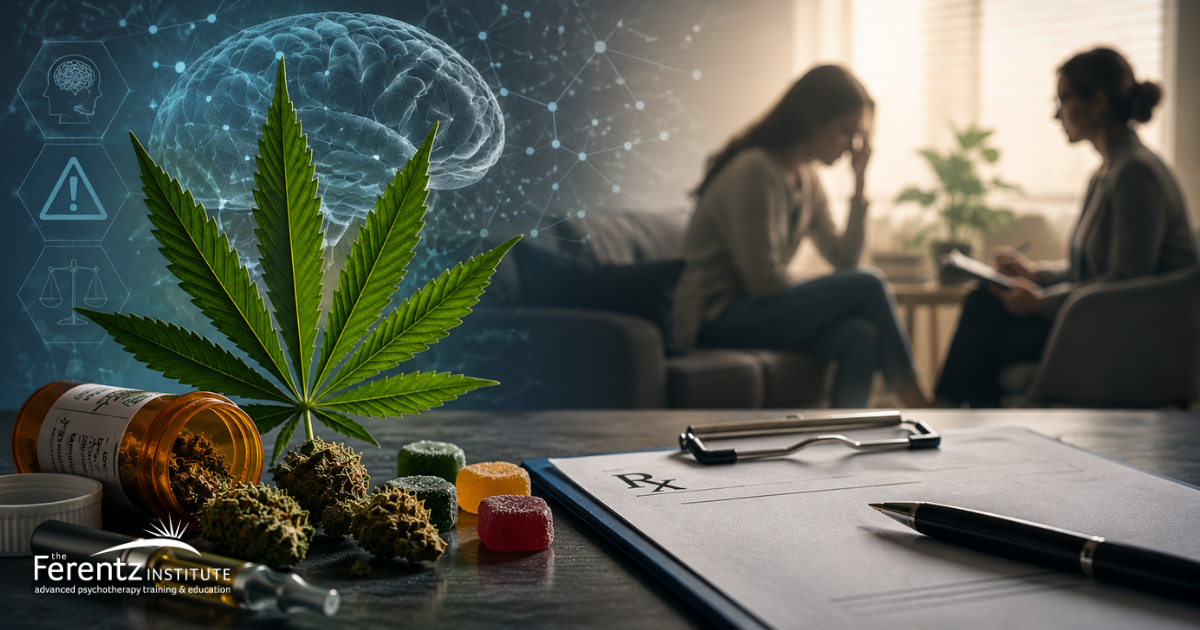
Although I have many topics that I am privileged to teach, in the last few years there has been a dramatic increase in the number of requests from outside organizations to speak with mental health providers on the deleterious impact of marijuana. I understand the increased need–as therapists we are having to navigate the fact that more and more clients are either replacing their prescription medications with THC products or choosing to only treat their distress with cannabis products.
It can create clinical and ethical dilemmas for us. We never want to come across as judgmental. We believe in the concept of client self-determination.
And yet, the research to date is clear. Cannabis products with unchecked and often dangerous THC potency exacerbates the very conditions they claim to treat: anxiety, depression, PTSD, and suicidal ideation. More than 50% of users become addicted. In addition, researchers are warning there is a frighteningly high correlation between adolescent cannabis use, and the onset of schizophrenia and psychosis. Adolescent cannabis use and cannabis disorder have now surpassed alcohol abuse.
The Gap Between Marketing and Medical Evidence
I believe it is our ethical responsibility as mental health providers to make sure that our clients know the facts. Dispensaries tout the incredible benefits of cannabis without any rigorous, controlled, double-blind studies to back it up. They encourage pregnant women to use cannabis, despite studies showing it negatively impacts a developing fetus. They tell Mothers they will be able to parent with less anxiety and stress, despite the fact that “Cannamoms” are:
- More likely to have altered focus
- Slower reaction times
- Compromised emotional availability
- Impaired supervision capabilities
- Poor responses in matters related to child safety.
Acute vs. Chronic Risks
There are risks related to acute use as well as chronic use. The lay public has been convinced that cannabis is harmless and an excellent, viable psychiatric resource. Putting the word “medical” in front of it added further disingenuous credibility. Cannabis is not medicine and the negative mental and medical health impact can be profound. No national or international medical or mental health organization condones its use for any psychiatric disorder.
Clinical Realities in Therapy Sessions
In the past few years, I have had more frequent conversations with clients who innocently start using THC or CBD products (which also often contain THC) and then discover they need to keep using more to achieve the outcome they want.
Once they learn that THC makes anxiety and the vegetative symptoms of depression and PTSD worse, as well as the important fact that none of the products are regulated–so you never know how much THC you are inhaling or ingesting–it opens the door for meaningful conversations about getting off gummies and other THC laced candies, drinks, and baked goods, as well as the habit of smoking or vaping it.
Therapists need to recognize that some clients are showing up for therapy sessions under the influence of cannabis. No matter how much clients believe it “relaxes them,” the same issues related to impaired memory, judgment, focus, attention and relational connection play themselves out when attempting to gain insight and safely process deeper material in therapy.
Evidence-Based Resources for Clinicians
The best website I have found to get a non-biased, rigorously scientific database of the world’s research on the impact of cannabis use is iasic1.org - The International Academy on the Science and Impact of Cannabis. Clients and therapists alike can get state of the art information on everything related to cannabis and depression:
- Depression, anxiety, and PTSD
- Suicidality and ADHD
- Psychosis and addiction
- Impact on different stages of development and throughout the life span.
Mental health providers need to be willing to address the risks and dangers head on, with compassion and accurate information. Let’s help to alleviate the rise in cannabis addiction and all the negative physical, emotional, psychological, and relational complications that it is creating.
For a deeper dive into this important topic, please join me on Wednesday, September 9 for my upcoming workshop on The Risks and Dangers of Medical and Recreational Marijuana.