
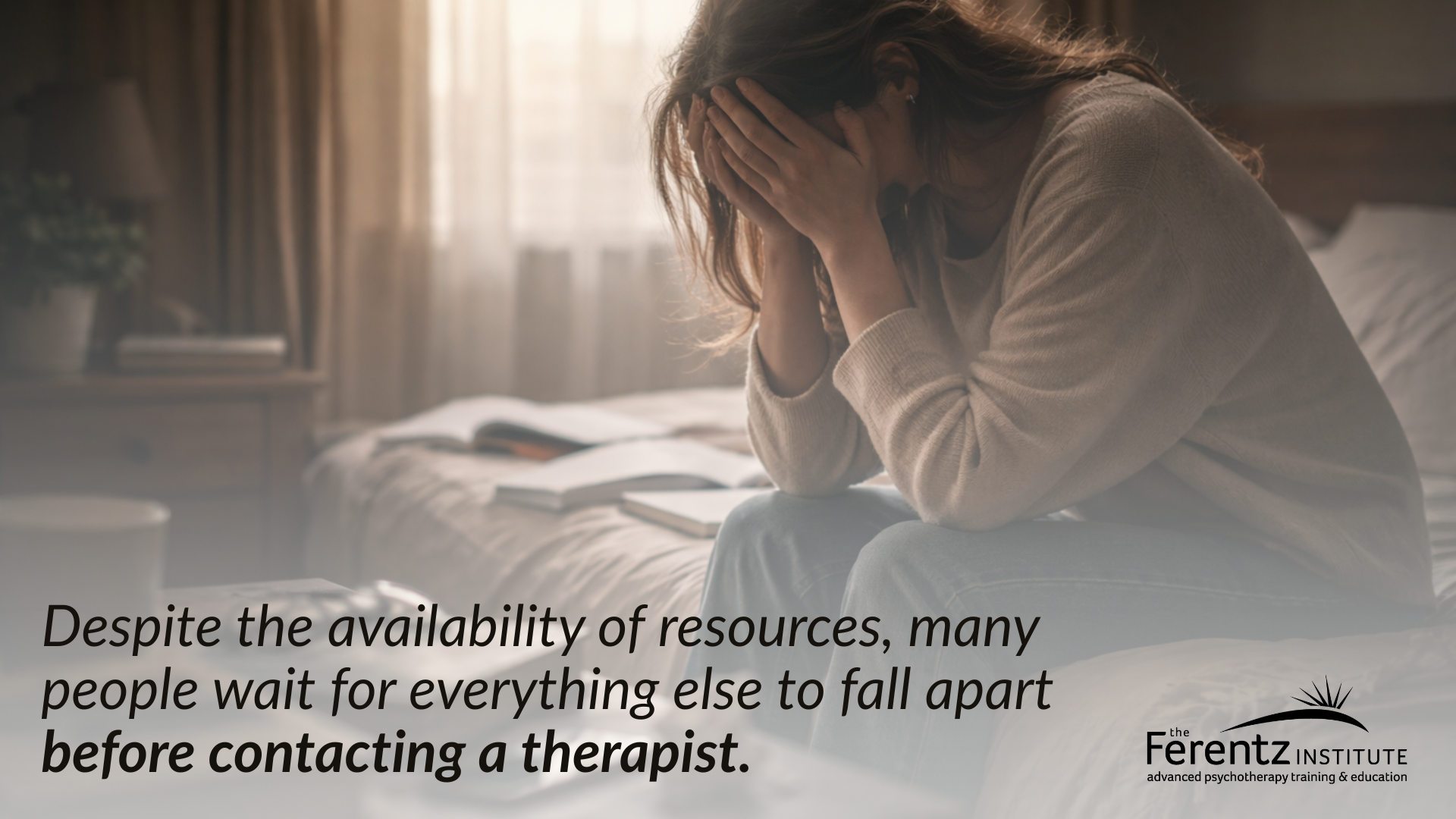
Although we’ve come a long way in our culture regarding the de-stigmatization of therapy, it still seems as if reaching out and asking for professional help is the last option for many people. There’s a list of strategies that often come before therapy: talking to friends; connecting with clergy; reading self-help books; watching talk shows for unprofessional “guidance”; surfing the Internet and social media for self-diagnoses; posting vulnerable questions anonymously in chat rooms and hoping for wise responses. A strategy that is becoming more common is turning to an AI therapist. Some people seem to like the anonymity of that. However, since it's not rooted in genuine relationship, I find it very concerning. Despite the availability of resources, many people wait for everything else to fall apart before contacting a therapist.
I believe it takes tremendous courage to reach out to a mental health professional. I understand the brave vulnerability that’s created when someone discloses to a relative stranger their important and intimate thoughts, feelings, and experiences. It’s always poignant to sit with new clients and hear them distort coming in to therapy-something that takes great inner strength- as a “weakness” or “failure.” Why would they think asking for help is a sign of weakness? And why is it so hard to ask in the first place? Like many other things, I believe this has its roots in family-of-origin experiences. When asking for help is a struggle for clients, it's worth exploring the following questions:
- While you were growing up, what kind of messages did you get about asking for help? What was modeled?
- Did your family place more value on “doing it yourself” or “leaning on others?”
- Were there available resources for comfort, guidance, reassurance and protection?
- When you did attempt to reach out in childhood, how did the people in your life respond? Was it safe to ask?
Those few questions can shed a lot of light on whether clients had to go through life overly self-reliant or were taught to feel comfortable turning to others for guidance, feedback, support, or comfort. If the messages they got, either overtly or covertly, taught them that reaching out was unacceptable, futile, or would cause more pain, it makes sense that they would go it alone whenever possible. Family members modeled whether asking for help was acceptable, and the extent to which outsiders could be trusted resources. Past experiences with significant others served to either reinforce the notion that help was available, consistent, predictable and safe, or unavailable and an unsafe proposition. In those cases, it feels less depressing and rejecting to simply stop asking for help than to ask and not get a supportive response.
We can help clients to realize that they don't need to keep superimposing past experiences onto the present. It's never too late to learn to ask for help and re-frame it as sign of strength. When they are faced with feelings or experiences that are challenging, frightening, or overwhelming, asking for help means they care enough about themselves to get the support they deserve. Learning how to be selective when they do reach out can also increase their chances of getting a safe and compassionate response.
Clinician’s Tips
Questions to help clients process the issue more deeply:
- What are the situations in your life that would benefit from outside help and support?
- Who are the people in your life who would be safe to reach out to for assistance?
- What professional resources would you encourage a best friend to use if they needed help?
- What are three ways in which asking for professional help can be a sign of strength?